Below are discussion questions for book clubs, reading groups and poetry circles reading my two books: Called to Coddiwomple, a memoir in poetry and prose (Ginninderra Press, 2023), and Time Like Coins, my first solo collection of poems, also published by Ginninderra Press. Use as many or as few as suit your group.
A few notes for whoever is hosting
- The books. Called to Coddiwomple is 84 pages of memoir in poetry and prose. Time Like Coins is a collection of poems.
- Copies. Both books are available from Ginninderra Press, and there are library options too. I have put it all in one place: where to buy or borrow my books.
Called to Coddiwomple: discussion questions
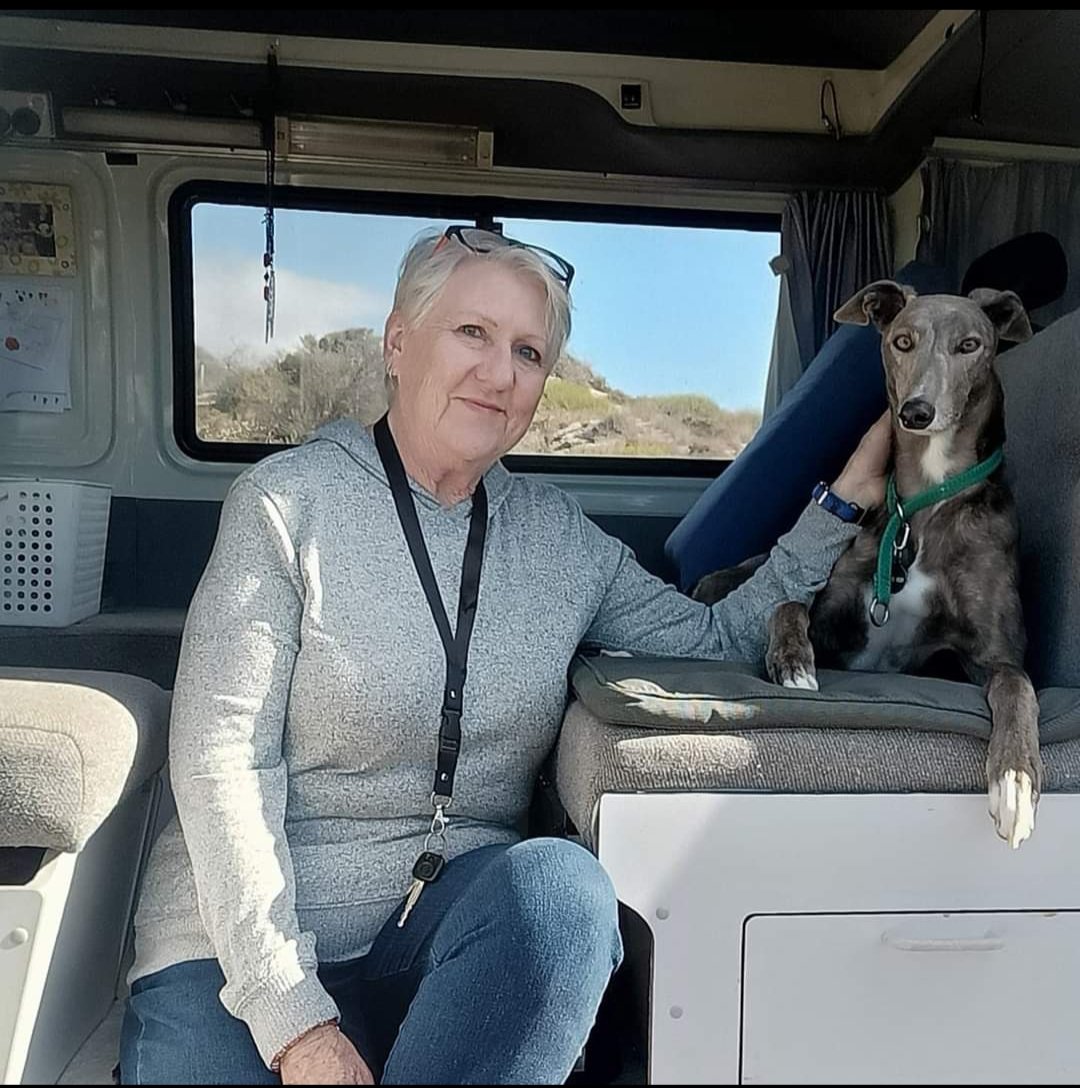
Called to Coddiwomple follows me from memories of family and country South Australia to the beginning of my nomadic life in my campervan, Trevor. It moves between memory and the present tense of travel: family, country childhoods, ageing, change and self-discovery.
- To coddiwomple is to travel purposefully toward an as-yet-unknown destination. Having finished the book, where do you think the journey was heading? Did it arrive anywhere?
- The book moves between memory and the present, and between poetry and prose. How did those shifts change the way you read it? Was there a moment when a poem said something the prose could not, or the other way round?
- In his note on the publisher's page, Martin Christmas says the book is not a tour guide of country South Australia. If it is not a travel guide, what kind of travel writing is it?
- Martin Christmas also points to a memory of childhood in a troubled family, followed by the poems "A Life So Small" and "Books". What do those pieces suggest about where a love of words can come from?
- He mentions a difficult drive with my father and his brother that led to my discovery of the Flinders Ranges. Which places in the book seem to carry a person or a relationship with them? Is there a place in your own life that works that way?
- Selling most of what you own and pointing a van at the horizon is a big step at any age. What did the book make you think about the things we keep and the things we let go?
- The book is, in the end, about coming of age at every age. Do you think we keep coming of age? What marked the most recent one in your own life?
- How does the book treat getting older: as loss, as freedom, or as both at once?
- Martin Christmas asks, "Who is Trevor?" How does the van figure in the book, and why do you think people name their vehicles?
- The book is also about learning to write the truest version of a thing rather than the tidiest one. Where did you feel it chose truth over tidiness?
- A memoir told partly in poems leaves gaps for the reader to fill. What did you find yourself filling in?
Time Like Coins: discussion questions
Time Like Coins is my first solo collection of poems, published by Ginninderra Press and later nominated for an Anne Elder Award, the award for a sole-authored first book of poetry published in Australia, administered since 2018 by Australian Poetry. The poems turn a patient eye on memory, loss, nature, family and ageing, and on the small details that give a life its shape.
- What does the title suggest about how time is counted, spent or saved? Did any poem change your reading of it?
- In her note on the publisher's page, Carolyn Cordon writes that the poems look at "ordinary" things and make them extraordinary, mentioning frost becoming toffee and dew drops becoming miniature rainbows. Choose a poem where an everyday detail turned into something else for you. How was it done?
- Loss is one of the collection's subjects. Where did you find consolation in the poems, and where did they decline to offer any?
- Nature is another. Is the natural world the subject of these poems, or a way of talking about something else?
- Carolyn Cordon describes the poems' view as that of a parent and grandparent. How do the poems handle family and the view across generations?
- She also mentions the poet examining herself through the face in her own mirror. How honest can a poet be about herself, and did you believe these poems?
- If your group has read both books: Time Like Coins stays still and looks closely, while Called to Coddiwomple moves between memory and the road. Which suited you better, and why?
Would your group like a visit?
I give author talks for book clubs and readers' groups, as well as libraries, community events and schools: talks and readings about the books, van life and writing from the road. I travel full-time, so there is no fixed timetable, but if your group is somewhere I am headed, a visit can often be folded into the trip. There is more in planning an author talk or writing workshop, or you can send me a note.